Is bioethanol getting a second look? 27 views

The bioethanol sector has been an important biofuel for the past decades, though it is maxing out on its addressable market.  Alcohol-to-Jet (ATJ) is unlocking a new application for ethanol, creating significant opportunities in this industry.  LanzaJet is one of the leaders providing ATJ technology focusing on the production of sustainable aviation fuel (SAF) from ethanol and other non-food feedstocks.   

Bioethanol production largely continues to be populated with first-generation ethanol (e.g., corn and sugarcane feedstocks) producers.  Concerns about competition with food resources and doubts about the environmental sustainability of first-generation processes, as a well as a search for a sustainable cost advantage over first-generation production methods, continue to motivate the development of advanced ethanol technology. 

Despite the second-generation ethanol technology (based on lignocellulosic biomass or non-food biomass such as agricultural residues) having been developed for several years, success has been difficult to achieve, with many developers exiting the sector, leaving only the most promising technologies still operating. These remaining second-generation technologies have embraced a broadly diversified set of strategies to continue the process of commercialization.  

“Third-generation” algae technology has been studied and developed for the production of ethanol through, but the studies remain to be demonstrated at commercial scale due to high capital costs and separation costs for the algal oil and co-products. 

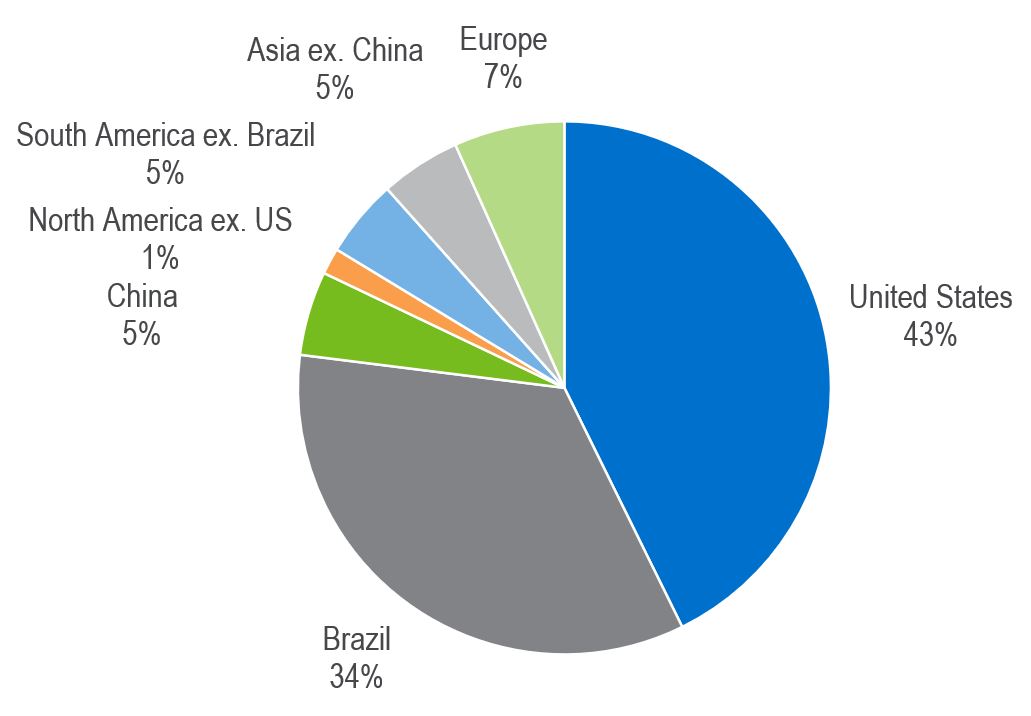
Global ethanol capacity is still concentrated in the United States and Brazil, with a combined capacity of around 84 percent.  Therefore, first-generation ethanol produced from corn and sugarcane continues to dominate global ethanol production.  In the recent development, Braskem, a prominent biopolymer producer using ethanol based route in Brazil, has partnered with a SCG Chemicals, a petrochemical in Thailand, to establish Braskem Siam Company Limited in Thailand.  The joint venture aims to produce bioethylene with a capacity of 200 000 tons per year through agricultural based ethanol dehydration.  Bioethylene will be used in the production of bio-based polyethylene.


Global Ethanol Capacity by Regions


A reduction in GHG emissions has been one of the major drivers for the development of the ethanol market.  Based on an LCA study by Renewable Fuels Association, total emissions for ethanol from corn production to the consumption of ethanol as fuel in the automobile can total to around 53 g/MJ, almost 50 percent lower than the conventional gasoline.   However, the growth for any biofuel is subject to the presence of regulatory mechanisms that serve to offset the cost of disadvantage of biofuels against the petroleum-derived products.  Effectively, all the biofuels, even at the mass scale using widely available feedstock and well-developed technology such as the first-generation ethanol, are significantly more expensive than their petroleum-based equivalents.

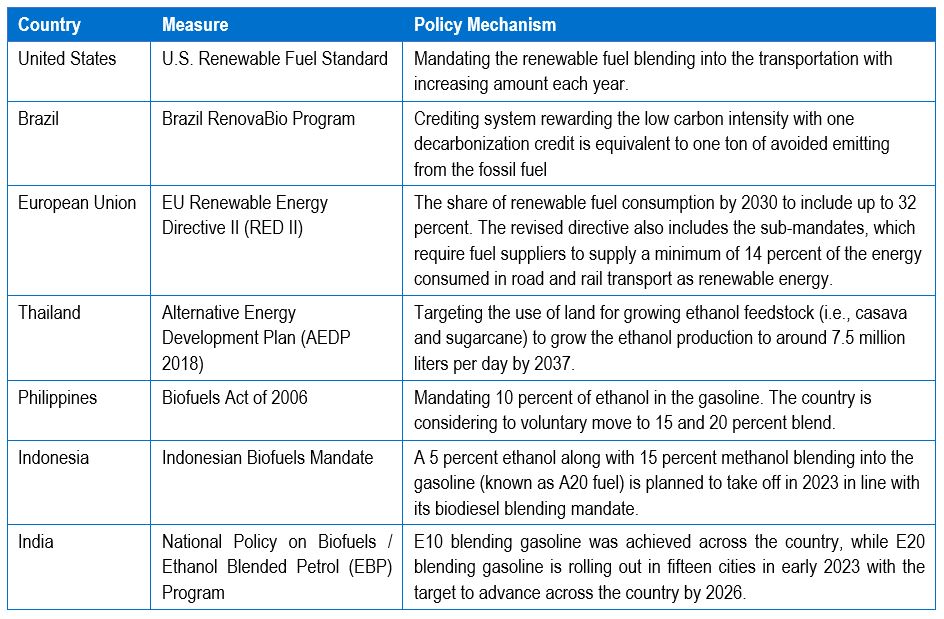
Various government policies have been increasingly discussed on ethanol as a strategic for transportation decarbonization.  A summary of the biofuels policy by major nationals that play the key role in the bioethanol market are highlighted in the table below.

A Summary of Biofuels Policy


    Appointment of Chair Designate 46 views

    Croda International Plc (“Croda” or “the Company”) today announces that it has appointed Danuta Gray as a Non-Executive Director and Chair Designate. Danuta will join the Board with effect from 1 February 2024 and will succeed Dame Anita Frew (DBE) as Chair at the conclusion of the Company’s AGM on 24 April 2024. Anita will then retire from the Board after nine years as Croda’s Chair.

    Danuta has held Board positions with both FTSE 100 and FTSE 250 companies across a range of sectors for the past nineteen years. She is currently Chair of Direct Line Insurance Group Plc and a Non-Executive Director and Chair of the Remuneration Committee at Burberry Group plc.  She is also a member of the Employ Autism Development Board.

    Danuta has extensive Non-Executive listed company Board experience having previously been Chair of St Modwen Property plc and also having served on the Boards of: Aldermore Bank plc, Old Mutual plc, Page Group plc, Paddy Power plc and Aer Lingus plc as well as a Non-Executive Member of the Defence Board of the UK Ministry of Defence.   On joining the Board, Danuta will be appointed to the Nomination Committee and will succeed Anita Frew as Chair of the Nomination Committee in April 2024.

    Jacqui Ferguson, Senior Independent Director said:

    “I am delighted that the comprehensive search process for our next Chair has resulted in the appointment of Danuta. Danuta is a highly experienced Non-Executive Director and Chair with a deep understanding of growing consumer focused and high technology businesses in international markets.  She has served on the Boards of a variety of listed companies and her depth of Boardroom experience and strong understanding of UK governance will be of enormous benefit to Croda.

    On behalf of the Board and everyone at Croda, I would like to thank Anita for her outstanding commitment to Croda since 2014 and her leadership of the Board and stewardship during what has been a period of significant growth and strong performance”.

    Danuta Gray said:

    “I feel tremendous affinity with Croda given the Group’s strong customer focus, market-leading innovation and passion for using smart science to improve lives. With its talented employees, positive culture and refocused portfolio, Croda has an exciting future and I look forward to working with the Croda team to deliver on opportunities that are ahead.”

    Dame Anita Frew, Chair said:

    “It has been my great privilege to work with Croda and to serve as Chair of the Board since 2014 and I am delighted that I will in due course be handing over the reins to Danuta who will help steer Croda through this next phase.”

      INEOS Enterprises Acquires Eramet Titanium & Iron (ETI) for $245 million. 31 views

      INEOS Enterprises has today announced the acquisition of Eramet Titanium & Iron (ETA) from Eramet for $245m. The deal which takes immediate effect, was completed today following the satisfaction of regulatory approvals. ETI consists of an ilmenite transformation plant in Norway producing titanium slag which is used in the pigments industry. It also produces high-purity pig iron sold to European foundries. The business will be known as INEOS Tyssedal The agreement between Eramet and INEOS Enterprises also includes a long-term supply contract for ilmenite produced by Grande Côte Opérations (“GCO”), the Group’s subsidiary which operates the mineral sands mine in Senegal.
       
      Commenting on the acquisition, Ashley Reed, CEO INEOS Enterprises said “We are very pleased to acquire ETI from Eramet. This is a good quality asset, complemented by an experienced operations team. We believe the next phase of ETI’s development can be well progressed under INEOS ownership and further improve the long-term sustainability of the company.”

        Arxada Appoints Sanjeev Rastogi as Chief Executive Officer 30 views

        Basel, Switzerland- September 20, 2023—Arxada, a global, science-based leader in innovative specialty chemicals, today announced the appointment of Sanjeev Rastogi as Chief Executive Officer (CEO), effective immediately. Concurrently, Marc Doyle who has successfully led Arxada since its foundation, will transition to a new role as a member of the Board of Directors. This strategic move reflects the company’s commitment to driving continuity, growth and sustainability in its portfolio.

        Rastogi joined Arxada in April 2023 as president of the Consumer Microbial Control (CMC) business. With 30 years of industry experience, he has a proven track record of profitability, growing and building businesses through his strategic thinking, marketing excellence and operational expertise. Rastogi is accomplished in building high-caliber teams that execute effectively, while building sustainable portfolios. During his tenure with Arxada, he has quickly and positively impacted the CMC business, reflecting an innovation-forward and customer-centric approach. Rastogi intends to continue driving the company with a focus on the disruptive, sustainable innovations Arxada’s customers seek along with further developing  a performance-based work culture.

        “I am both honored and excited to take on the role of CEO at Arxada,” Rastogi said. “It is a privilege to lead such a talented team and work alongside dedicated colleagues who are committed to delivering exceptional results. I am grateful to Marc Doyle for his strong contributions and his tireless commitment to the business. I look forward to building upon the robust foundation he has laid. Additionally, I am eager to take Arxada to its next level, together with a first-rate team, navigating the evolving landscape of our industry as we strive to be the preservation go-to within specialty chemicals.”

        Before joining Arxada, Rastogi served as Senior Vice President for Hexion’s Resins and was Vice President of Honeywell’s Fluorine Products businesses. He has an MBA in finance from the Stern School of Business at New York University and a PhD in chemical engineering from the University of Delaware.

        “My time with Arxada has been a unique and rewarding opportunity,” Doyle said. “I look forward to staying involved as a member of the board and know I am handing Arxada’s leadership over to very capable hands.” 

        Doyle joined what is now Arxada in July 2021 upon the acquisition of Lonza Specialty Ingredients (LSI) by private equity firms Bain Capital and Cinven. His leadership was pivotal during the carve-out phase and the acquisitions of both Troy Corporation and Enviro Tech Chemical Services. The clear and concise business strategy he developed helped establish the business for its future growth trajectory. Doyle will join the board as a non-executive member and will continue to remain involved in guiding Arxada’s path forward. 

          Brenntag Specialties agrees to acquire Colony Gums, strengthening Life Science portfolio in North America 30 views

          • Colony Gums is a US-based manufacturer of stabilizer blends and a blending services provider
          • This acquisition will strengthen and expands Brenntag’s services and product portfolio in Nutrition

          Brenntag [ISIN DE000A1DAHH0], the leader in chemicals and ingredients distribution, today announced an agreement to acquire Colony Gums, Inc., a US-based manufacturer of stabilizer blends and a blending services provider. The acquisition is expected to complement and expand Brenntag’s product portfolio and services in Life Sciences, primarily in Nutrition.

          Michael Friede, CEO of Brenntag Specialties, commented: “Colony Gums will complement our existing business and enable us to serve customers with stabilizer blends, blending solutions and hydrocolloids in our growth market of Nutrition, and other customers in Life Sciences markets globally. This is part of our ‘Strategy to Win’ to expand and fill white spots in our Life Science portfolio.” He added “I look forward to working with our new colleagues in Monroe and am excited to welcome them to the Brenntag team.”

          Colony Gums is a family-owned distributor headquartered in Monroe, North Carolina. The company has grown into a specialty ingredients supplier and blending services provider over several generations, with now more than 30 employees, servicing customers in North America. In 2022, the company reported annual sales of 38 million USD.

          Robert Muhlsteff, President of Colony Gums, added: ”Our team strives to enable customer growth and exceeding the expectations of our customers. I am excited to bring Brenntag customers our formulation expertise on stabilizer blends and individual hydrocolloids, and adding Brenntag’s broad portfolio of products and solutions to our offerings.”

          Financial details of the deal are not being disclosed. Closing of the transaction is subject to customary conditions including regulatory approvals and is expected in Q4 of 2023.

            PolyQuest To Acquire Baker Transportation 33 views

            Wilmington, N.C. (September 20, 2023) – PolyQuest, Inc. (PolyQuest) announced today that it will acquire Baker Transportation, Inc. (BTI) and should close on this transaction October 1, 2023.

            Baker Transportation has grown dramatically since its formation in 1987 and is one of the most dependable asset-based regional carriers in the southeastern US.  Based in Lake City, S.C., Baker is uniquely positioned adjacent to the I-95, I-20, and I-26 corridors which allows seamless access to domestic US distribution routes, as well as the ports of Wilmington, NC, Charleston, SC, and Savannah, GA.  

            “Although PolyQuest will continue buying freight services from existing freight vendors, the Baker acquisition promotes extreme flexibility in tailoring freight and logistics solutions for both PolyQuest’s and Baker Transportation’s current business partners,” advised John Marinelli, CEO of PolyQuest.  “Billy and Leila Baker, along with their sons Michael and Justin, have an excellent reputation in the industry.  They will continue to oversee all the transactional aspects of this business and remain fully committed to the existing Baker Transportation customer base today and into the future.  Once the transaction is completed, the new entity name will be Baker Transportation, LLC.”

            Michael Baker, VP of Operations at Baker Transportation, commented, “Over the past 20 years, PolyQuest has been a loyal customer of ours at Baker Transportation.  We are excited about what the future holds for our customers and employees and our continued growth in the transportation industry. Our primary focus over the last four decades has been to provide safe, dependable, and quality service. These core competencies will remain unchanged.”

            About PolyQuest, Inc.

            PolyQuest is a privately held thermoplastic resin distributor headquartered in Wilmington, North Carolina with U.S. facilities in Darlington, South Carolina; Florence, South Carolina; and Farmingdale, New York; and our European office in Austria. PolyQuest maintains a global reach offering one of the broadest resin catalogs in the hemisphere for the bottle, sheet, strapping, film, fiber, compounding, and injection molding markets. Contact us to learn more about PolyQuest as a partner for your PET, PP, PE, HIPS, and rPET materials needs and processing solutions.

              Vopak reaches agreement with Infracapital on the sale of its chemical terminals in Rotterdam 28 views

              Vopak reaches agreement with Infracapital on the sale of its chemical terminals in Rotterdam
               

              Rotterdam, the Netherlands, 19 September 2023 08:00 CEST

              Vopak announces that it has reached an agreement with Infracapital on the sale of its three chemical terminals in Rotterdam (Botlek, TTR and Chemiehaven) for a total purchase price of EUR 407 million including a conditional deferred payment of EUR 19.5 million. Total expected cash receipt net of transaction costs and net debt items at closing is around EUR 368 million. This divestment follows the strategic review as announced on 15 February 2023. The combined operational capacity of the three terminals is 1.4 million cbm.

              Infracapital, the infrastructure equity investment arm of M&G Plc, is a specialist European infrastructure investor with over 20 years of experience and a proven track record of owning infrastructure assets in the Netherlands.

              The transaction is subject to works council consultation and customary closing conditions and is expected to close before year end.

              Vopak expects to partially reverse the cash generating unit impairment charges, recorded in 2022 related to the divested terminal assets, for an amount of around EUR 54 million to be reported as an exceptional item. FY 2022 EBITDA excluding exceptional items of these entities was approximately EUR 45 million.

              Patrick van der Voort – Vopak Business Unit President Netherlands: “Although within Vopak we will surely miss our colleagues at the chemical terminals in Rotterdam, we are convinced that our customers and colleagues will be well served by partnering with Infracapital who is a long term and an experienced infrastructure investor. We would like to thank everyone involved for their trust and contribution to Vopak and will work together, with among others the works council towards a closing and smooth ownership transfer to Infracapital.”

              Michiel Gilsing, Member of the Executive Board and CFO of Vopak: “The divestment of the three chemical terminals in Rotterdam is in line with our strategic goals to improve the financial performance of the portfolio, grow Vopak’s footprint in gas and industrial terminals and accelerate towards new energies. We remain committed to actively manage our portfolio towards infrastructure investments that support the long term cash flow profile and return ambitions of the company.”

              Vopak’s Strategy – Shaping the future 
              Our commitment to shaping a better future has led us to set ambitious goals to guide us towards 2030. Our aim is to improve the financial and sustainability performance of our portfolio. In addition, we aim to grow in industrial and gas infrastructure by investing EUR 1 billion by 2030 and to accelerate in infrastructure for new energies by investing another EUR 1 billion over the same period. We are proud to be leading the way in providing infrastructure solutions that are and will be essential to the economy and the daily lives of people around the world.

              This press release contains inside information as meant in clause 7 of the Market Abuse Regulation.

              About Vopak 
              Royal Vopak is the world’s leading independent tank storage company. We store vital products with care. Products for everyday life. The energy that allows people to cook, heat or cool their homes and for transportation. The chemicals that enable companies to manufacture millions of useful products. The edible oils to prepare food. We take pride in improving access to cleaner energy and feedstocks for a growing world population, ensuring safe, clean and efficient storage and handling of bulk liquid products and gases at strategic locations around the world. We are excited to help shape a sustainable future by developing infrastructure solutions for new vital products, focusing on zero- and low-carbon hydrogen, ammonia, CO2, long duration energy storage and sustainable feedstocks. We have a track record of over 400 years in navigating change and are continuously investing in innovation. On sustainability, we are ambitious and performance driven, with a balanced roadmap that reflects key topics that matter most to our stakeholders and where we can have a positive impact for people, planet and profit and the United Nations Sustainable Development Goals. Vopak is listed on the Euronext Amsterdam and is headquartered in Rotterdam, the Netherlands. For more information, please visit www.vopak.com

                Board Announcement – CEO Pierre-Alain Ruffieux to leave Lonza – Albert M. Baehny to step in as CEO ad interim 26 views

                Basel, Switzerland, 18 September 2023 – Lonza announced today that Pierre-Alain Ruffieux, CEO, will leave the company at the end of September by mutual agreement. The Board of Directors also announced that Albert M. Baehny, Chairman, will take on the additional responsibility of Chief Executive Officer on an ad interim basis until a permanent successor is appointed.

                The medium-term strategy and outlook will be discussed in detail at the Capital Markets Day in Visp on 17th October 2023.

                Christoph Maeder, Lead Independent Director and Vice-Chairman, Lonza, said: “Albert has agreed to lead the Company as CEO on a temporary basis until a successor is in place, for which the Board thanks him. The search for a permanent CEO will start soon. The Board would like to thank Pierre-Alain for his service to Lonza and wishes him well in his future endeavors.”

                Albert M. Baehny, Chairman, Lonza, said: “I am committed to Lonza, our employees and all stakeholders. While recent months have undoubtedly been challenging, the company is a global leader in our industry and has many opportunities for further growth across all our businesses. In the months ahead, I will ensure that we are optimally positioned to fully capture those opportunities and I look forward to working with my Board and Executive Committee colleagues.”

                  SIKA ANNOUNCES CHANGES TO THE BOARD OF DIRECTORS AND THE GROUP MANAGEMENT AHEAD OF THE GROWTH STRATEGY 2028 ANNOUNCEMENT 29 views

                  ▪ Thierry F. J. Vanlancker to be proposed as new Chair of the Board of Directors at the Annual General Meeting 2024

                  ▪ Paul Hälg has decided to step down after twelve successful years

                  ▪ Rotation in Group Management ahead of new Growth Strategy 2028

                  Today, Sika announces planned changes to the Board of Directors and the Group Management. The decisions have been made ahead of the presentation of the new growth strategy at the Capital Markets Day on October 3, 2023.

                  Thierry F. J. Vanlancker will be proposed as new Chair of the Board of Directors at the next Annual General Meeting in 2024, as Paul Hälg has decided to step down from his position after twelve successful years to make way for a new era. Thierry F.J. Vanlancker has been a member of the Board since 2019. He has held various management positions in the chemical sector for more than 30 years and possesses in-depth knowledge of strategy, M&A, product development, sales & marketing with specific know-how in chemicals and distribution. Paul Hälg has been a member of the Board of Directors since 2009 and the Chair of the Board since 2012. During this time, Sika has seen significant profitable growth and numerous successful acquisitions and integrations, with Parex and MBCC as outstanding examples

                  Chief Executive Officer
                  “Paul has been a tremendous force and driver of our success in the past twelve years. His experience and strategic vision were crucial for Sika to become as successful as the company is now. He was especially instrumental during our historic fight for independence during a three-and-a-half-year hostile take-over battle that was resolved in June 2018. Sika and its 33,000 employees are more than grateful for his dedication and leadership as Chair of the Board during this time. Now, we are looking forward to working together with Thierry who we are convinced is a suitable successor to Paul, thanks to his broad experience in our sector and in the area of ESG.”Thomas Hasler, Chief Executive Officer

                  To enhance the capabilities and know-how of the Group Management in light of the new Growth Strategy 2028, the following changes to the management team will be effective as of October 1, 2023.

                  Christoph Ganz, currently Regional Manager Americas, is appointed Regional Manager EMEA. He joined Sika 27 years ago, has been a member of Group Management since 2007, and previously held positions in Switzerland, France, and the USA.

                  Mike Campion, currently Regional Manager Asia/Pacific, is appointed Regional Manager Americas. He joined Sika 25 years ago and has been a member of Group Management since 2017. He has worked in the USA and in Asia/Pacific.

                  Philippe Jost, currently Head Construction, is appointed Regional Manager Asia/Pacific. He joined Sika 26 years ago, has been a member of Group Management since 2019, and has held various management positions in the USA and in Switzerland.

                  Ivo Schädler, currently Regional Manager EMEA, is appointed Head Construction. He joined Sika 26 years ago, has been a member of Group Management since 2017, and has held managerial positions in both Switzerland and the UK.

                  Raffaella Marzi currently Head Human Resources & Compliance, will additionally act as Head Legal. She takes over from Stefan Mösli, who has decided to step down after successfully heading the department since 1996. Raffaella Marzi joined Sika nine years ago and has been a member of Group Management since 2020. Under her leadership, Sika has successfully integrated the Parex workforce and prepared the MBCC integration. Stefan Mösli will remain with Sika as Senior Counsel.

                  “We are very proud to have such a fantastic management team with so many strong leaders. Their extensive experience and dedication will successfully drive the execution of our new Growth Strategy 2028 and will further strengthen our organization. I’m looking forward to working with this team in its new setup. With these changes, we shape Sika for the years to come.”Thomas Hasler, Chief Executive Officer

                    INEOS announces the acquisition of the Eastman Texas City Site for ~$500 million 33 views

                    • The deal includes the 600kt Acetic Acid plant and all associated third party activities on the site.
                    • Eastman and INEOS have also entered into a Memorandum of Understanding to explore options for a long-term supply agreement for vinyl acetate monomer.
                    • David Brooks, CEO INEOS Acetyls, comments “We are delighted to announce this strategic acquisition which will help drive our global ambitions for our Acetyls business.”


                    INEOS has today announced it has reached an agreement with Eastman Chemical Company to purchase the Eastman Texas City site, including the 600kt Acetic Acid plant and all associated third party activities on the site, for circa $500 million.

                    Eastman and INEOS have also entered into a Memorandum of Understanding to explore options for a long-term supply agreement for vinyl acetate monomer.

                    David Brooks, CEO INEOS Acetyls, comments “We are delighted to announce this strategic acquisition which will help drive our global ambition for our Acetyls business. The site is ideally placed to take advantage of competitively priced feedstocks which will help support the growth of our business and sustainable future of the site.“

                    Currently INEOS licenses its leading Cativa® Acetic Acid Technology to Eastman Chemical Texas City for production of Acetic Acid at the site.

                    “We are happy to have reached this agreement with INEOS. They have been a strong partner with us at the Texas City site and have extensive experience and a complementary position in the acetyls space,” said Erwin Dijkman, Division President, Chemical Intermediates.

                    “Our Texas City Operations is an attractive site with an incredible team of people, and we are pleased that INEOS plans to further invest in and grow the site. We look forward to working closely with INEOS as we prepare for a seamless transition later this year, and longer-term as operators of our plasticizer assets at the site.”

                    All current employees on the Eastman Texas City site will transfer over to INEOS upon completion of the transaction. The plasticisers unit on the site will continue to be owned by Eastman, but will be operated and maintained by INEOS from closing.

                    The deal is targeted to close before the end of 2023, subject to regulatory approvals

                    .

                      Stratasys Completes Sale of Urethane Facilities 32 views

                      Sale allows Stratasys Direct to be more focused on supporting the company’s core business while enhancing efficiency and profitability

                      EDEN PRAIRIE, Minn. & REHOVOT, Israel–(BUSINESS WIRE)– Stratasys Ltd. (NASDAQ: SSYS) (“Stratasys” or the “Company”), a leader in polymer 3D printing solutions, today announced that on August 31, 2023 it completed the sale of the Stratasys Direct, Inc. (“Stratasys Direct”) urethane facilities located in Poway, California to the Lamarjean Group, dba as PolyCraft Tech.

                      Stratasys Direct is the company’s on-demand parts service bureau. The decision to sell the non-core Urethane facilities is part of an operational transformation effort that began in early 2023 and is intended to drive better focus, accountability, internal efficiency, and speed to customer, while simultaneously improving profitability.

                      “The closing of this transaction demonstrates the clear, decisive action we are taking to ensure our team focuses on delivering quality and specialized products to customers around the world, and to improve the profitability of Stratasys Direct,” said Gurvinder Kahlon, General Manager and Vice President, Stratasys Direct. “Stratasys Direct has a strong foundation with a breadth of technological expertise, and I am confident in the opportunities ahead as we continue to take steps to drive stronger margins and position the business for future growth.”

                      “This is an important step in aligning the business to the company’s growth strategy and streamlining the organization for improved efficiency,” said Dr. Yoav Zeif, CEO of Stratasys. “The Stratasys Direct team is already improving our SAF and P3 technologies and they have grown key customer relationships through cross-selling. With even greater focus on the core strengths and technologies of Stratasys, the team will be even better positioned to provide customers with leading additive manufacturing solutions.”

                      About Stratasys

                      Stratasys is leading the global shift to additive manufacturing with innovative 3D printing solutions for industries such as aerospace, automotive, consumer products and healthcare. Through smart and connected 3D printers, polymer materials, a software ecosystem, and parts on demand, Stratasys solutions deliver competitive advantages at every stage in the product value chain. The world’s leading organizations turn to Stratasys to transform product design, bring agility to manufacturing and supply chains, and improve patient care.

                      To learn more about Stratasys, visit www.stratasys.com, the Stratasys blog, Twitter, LinkedIn, or Facebook. Stratasys reserves the right to utilize any of the foregoing social media platforms, including Stratasys’ websites, to share material, non-public information pursuant to the SEC’s Regulation FD. To the extent necessary and mandated by applicable law, Stratasys will also include such information in its public disclosure filings.

                      Stratasys, SAF, and P3 are trademarks or registered trademarks of Stratasys Ltd. and/or its affiliates. All other trademarks are the property of their respective owners, and Stratasys assumes no responsibility with regard to the selection, performance, or use of these non-Stratasys products.

                      Cautionary Statement Regarding Forward-Looking Statements

                      The statements in this press release regarding Stratasys and the transformation of Stratasys Direct, its execution and expected results and implications on Stratasys’ performance and the benefits deriving to its customers and other third parties, are “forward-looking statements” within the meaning of the Private Securities Litigation Reform Act of 1995, Section 27A of the Securities Act of 1933, and Section 21E of the Securities Exchange Act of 1934. All statements in this communication, other than statements of historical fact, are forward-looking. Such statements are based on management’s beliefs and assumptions made based on information currently available to management. These forward-looking statements involve known and unknown risks and uncertainties, which may cause Stratasys’ actual results and performance to be materially different from those expressed or implied in the forward-looking statements. For additional information about other factors that could cause actual results to differ materially from those described in the forward-looking statements, please refer to Stratasys’ periodic reports and other filings with the SEC, including the risk factors identified in Stratasys’ Annual Reports on Form 20-F, and Stratasys’ Reports of Foreign Private Issuer on Form 6-K that published its results for the quarter and six months ended June 30, 2023, which it furnished to the SEC on August 9, 2023. The forward-looking statements included in this communication are made only as of the date hereof. Stratasys undertakes no obligation to update any forward-looking statements to reflect subsequent events or circumstances, except as required by law.

                        Celanese Completes the Formation of Nutrinova, a Food Ingredients Joint Venture with Mitsui 31 views

                        DALLAS (September 27, 2023) – Celanese Corporation (NYSE: CE), a global chemical and specialty materials company today announced that its previously announced formation of Nutrinova, a Food Ingredients joint venture (JV) with Mitsui & Co., Ltd., is complete. Celanese contributed the assets, technology and employees of its Food Ingredients business while retaining a 30 percent stake in the JV. Mitsui acquired the remaining 70 percent stake at a purchase price of $472.5 million, representing an enterprise valuation of approximately 15 times 2022 EBITDA.

                        “We are pleased to have monetized a majority of the Food Ingredients business in a value accretive way and also maintained the demand benefits of raw material integration with the Acetyl Chain,” said Lori Ryerkerk, chairman and chief executive officer. “We will immediately deploy transaction proceeds in the third quarter to execute against our deleveraging plan and are on pace to meaningfully exceed the full year objective to reduce net debt by $1 billion in 2023.”


                        About Celanese
                        Celanese Corporation is a global chemical leader in the production of differentiated chemistry solutions and specialty materials used in most major industries and consumer applications. Our businesses use the full breadth of Celanese’s global chemistry, technology and commercial expertise to create value for our customers, employees, shareholders and the corporation. As we partner with our customers to solve their most critical business needs, we strive to make a positive impact on our communities and the world through The Celanese Foundation. Based in Dallas, Celanese employs approximately 13,000 employees worldwide and had 2022 net sales of $9.7 billion. For more information about Celanese Corporation and its product offerings, visit www.celanese.com.

                          Tim Knavish elected PPG Chairman and CEO; Michael McGarry to retire as Executive Chairman 28 views

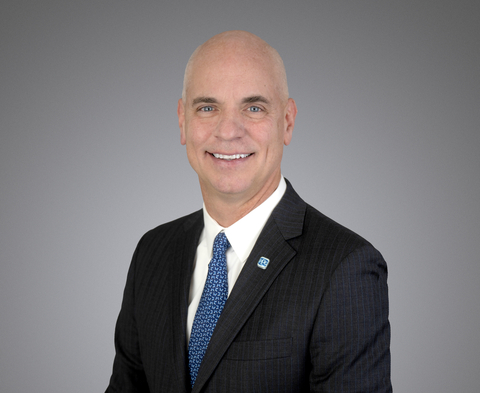
                           PPG (NYSE:PPG) today announced that its Board of Directors has unanimously elected PPG president and chief executive officer (CEO), Tim Knavish, 58, as chair of the company’s Board of Directors and CEO, effective Oct. 1, 2023. Knavish succeeds Michael McGarry, 65, who served as chairman and CEO from 2016 to 2022 and is retiring as executive chairman, also effective Oct. 1, 2023.

                          PPG's Board of Directors has unanimously elected PPG president and chief executive officer (CEO), Tim Knavish, as chair of the company’s Board of Directors and CEO, effective Oct. 1, 2023. (Photo: Business Wire)

                          PPG’s Board of Directors has unanimously elected PPG president and chief executive officer (CEO), Tim Knavish, as chair of the company’s Board of Directors and CEO, effective Oct. 1, 2023. (Photo: Business Wire)

                          “On behalf of the PPG board of directors, we want to congratulate Tim and recognize the significant contributions Michael has made in leading PPG through some of the most challenging periods in its 140-year history,” said Hugh Grant, PPG independent lead director and retired chairman and chief executive officer, Monsanto Company. “Michael’s leadership has made a significant impact on expanding the company’s portfolio and reach in key growth markets, strengthened PPG’s position, and set the company on a solid path for future growth and success. We wish him the very best. As we look ahead, the board fully supports Tim and the entire PPG team as they work to achieve future growth and increased value for our shareholders.

                          “After a thoughtful and deliberative process, the board of directors agreed that appointing Tim as chair and CEO enhances the alignment between PPG management and the Board in implementing PPG’s enterprise growth strategy. Tim has an intimate knowledge of the business, can quickly identify and implement strategic priorities, and has demonstrated the ability to serve as an effective bridge between the Board and management,” added Grant.

                          Knavish joined PPG in 1987 at PPG’s global headquarters in Pittsburgh and he has held roles of increasing responsibility during his 36 years with the Company. Knavish has served in his current role as president and CEO since Jan. 1, 2023 and previously served as chief operating officer beginning in March 2022. Prior to being named chief operating officer, Knavish was executive vice president beginning in October 2019.

                          PPG: WE PROTECT AND BEAUTIFY THE WORLD®

                          At PPG (NYSE:PPG), we work every day to develop and deliver the paints, coatings and specialty materials that our customers have trusted for 140 years. Through dedication and creativity, we solve our customers’ biggest challenges, collaborating closely to find the right path forward. With headquarters in Pittsburgh, we operate and innovate in more than 70 countries and reported net sales of $17.7 billion in 2022. We serve customers in construction, consumer products, industrial and transportation markets and aftermarkets. To learn more, visit www.ppg.com.

                          The PPG Logo and We protect and beautify the world are registered trademarks of PPG Industries Ohio, Inc.

                            IMCD Korea enhances growth momentum in the coatings and construction market with the acquisition of Needfill 34 views

                            IMCD N.V. (“IMCD” or “Company”), a global leading distribution partner, formulator of speciality chemicals and ingredients, today announces that IMCD has signed an agreement to acquire 100% of the shares of the speciality distribution company Needfill Co., Ltd. in South Korea (“Needfill”).


                            Photographed:

                            • Chris Lee, CEO of Needfill (left)
                            • Henri Kwon, Managing Director of IMCD Korea (right)

                            Established in 1991, Needfill has long-standing partnerships with some of the leading global suppliers and serves the paint, coatings, inks, textiles, electronics, and polymer markets. Needfill, based in Seoul, generated a revenue of approximately KRW 26.2 billion (ca. EUR 18 million) in 2022 and has 18 employees.

                            “As we look ahead, the coatings market in South Korea has an exciting growth potential. Having Needfill join us provides a strong addition to our coatings and construction business, enhancing our range of services and portfolio,” said Henri Kwon, Managing Director of IMCD Korea. “We are confident that Needfill’s dedicated team will support our business expansion, reinforcing our presence in the Korean market,” concluded Kwon.

                            “Needfill has continuously grown, earning recognition as a respected company for over 30 years. With IMCD’s global network, expertise, and a strong commitment to sustainability, I’m confident that together we will significantly enhance our growth potential”, commented Chris Lee, CEO of Needfill. “My team has been a vital asset to the company, and I believe they will have even more opportunities to develop and maximise their potential with IMCD.”

                            The closing of the transaction is subject to customary closing conditions and is expected to take place in the fourth quarter of 2023.

                              Arclin Acquires Belle Chemical Company Belle, West Virginia facility is a leading producer of methylamines and derivatives 31 views

                              ATLANTA, Sept. 27, 2023 (GLOBE NEWSWIRE) — Arclin, a chemistry-based manufacturer of polymer technologies and engineered products for numerous industrial applications including building products, agriculture, transportation infrastructure, weather & fire protection and other industries, announced today that it has completed the purchase of Belle Chemical Company, a leading producer of methylamines and derivatives located in Belle, WV. The plant has approximately 60 employees.

                              Acquisition of Belle Chemical expands Arclin’s capabilities in North America and is viewed as a key step in the company’s strategy toward expanding its product presence into markets that are adjacent to its core chemistries and business. “The addition of the Belle Chemical business, which is operated by a great team in West Virginia, is an exciting opportunity for Arclin,” said Bradley Bolduc, President & CEO of Arclin. Bolduc continued that “Arclin has a strategy to diversify our product offerings into markets that are related to our core chemical competencies. The addition of the Belle Chemical business will provide further diversification into water treatment, health care, pharmaceuticals, agriculture, oil & gas, and electronics, all areas we are excited about in the future.”

                              “The sale of the Belle Chemical Company to Arclin was a logical next step for the business as Belle Chemical Company transitions to a growth company,” said Belle Chemical Company Plant Manager Alicha Hunt. “Belle’s customers will benefit from Arclin’s breadth of expertise in chemical manufacture and distribution and interest in rapid deployment of resources in support of the growth strategy,” she said.

                              Transition efforts are well underway and Arclin anticipates a smooth transition for existing Belle Chemical Company customers. The company began operating as Arclin Amines in September.

                              About Arclin:
                              Arclin is a leading provider of chemistry-based polymer technologies and engineered products for numerous industrial applications including building products, agriculture, transportation infrastructure, chemical intermediates, and other industries. Headquartered in Alpharetta, Georgia. Arclin has offices and manufacturing facilities throughout the U.S. and Canada and manufactures for customers worldwide. More information at www.arclin.com.

                                KMG International Group will have new chief executive officer 40 views

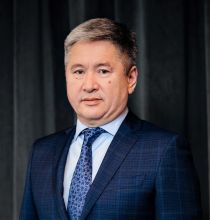
                                National Company KazMunayGas (KMG), the sole shareholder of KMG International N.V. (KMGI), made a decision on appointment of Bakhyt Kulmakhanov as Executive Director of KMG International Group. The appointment will take effect upon completion of the formal procedures.

                                To date, this position has been held by Beimbet Shayakhmetov, whom KMG and KMGI thank for his contribution and support from 2019 to the present.

                                RP-CEO-IMG_2247-Edit_1

                                Mr. Bakhyt Kulmakhanov was born in 1967 and graduated from Kazakh Polytechnic Institute, qualification “Mechanical Engineering” in 1991. Mr Kulmakhanov has an extensive experience working for various state bodies of Kazakhstan as well as in private companies.

                                “We are confident that the experience and knowledge of Mr Kulmakhanov will help to address the challenges KMGI has been facing due to the market conditions and are sure that the new CEO will continue implementing the development strategy of KMGI in the region”, said Daniyar Berlibayev, Chairman of the Board of Directors of KMGI.

                                Fully owned by the national oil and gas company – KazMunayGas from Kazakhstan, KMG International is a company headquartered in Amsterdam (Netherlands), which owns and operates significant operations in Eastern Europe and Central Asia.

                                With approximately 6,000 employees, the main activities of the Group consist of major commercial operations with oil and petroleum products (trading), refining and petrochemicals, distribution (retail) and marketing, as well as other services in the field of oil, well drilling and industrial services integrated EPCM (engineering, procurement, construction and project management).

                                The Group operates in Romania two refineries – Petromidia Năvodari (the largest and most complex internal processing unit) and Vega Ploieşti (the only producer of bitumen and hexane in Romania), but also the only petrochemical division. In addition, there is an extensive fuel distribution network in the Black Sea region, both through the Group’s subsidiaries (Romania, Moldova, Bulgaria and Georgia) and through various partners in the Central and Eastern European region (Turkey, Serbia or Greece).

                                  Safic-Alcan further strengthens its presence in Southern Africa and acquires Southern Chemicals (Pty) Ltd. 35 views

                                  Paris-La Défense, September 12, 2023

                                  Safic-Alcan, a major distributor of specialty chemicals, announces that it has acquired 100% of Southern Chemicals, a leading South African specialty chemical distributor in the region.

                                  Established in 1996 by Rod Proome, Southern Chemicals supplies industrial speciality chemicals and additives into industries such as polyurethane foams, industrial coatings, adhesives and elastomers.

                                  With warehousing capabilities in Durban, Port Elizabeth, Johannesburg and Cape town, Southern Chemicals is very well positioned to sell and distribute specialty chemicals and additives across the region.

                                  We are thrilled to welcome Rod Proome, Mike Formo and the entire team to the Safic-Alcan Group. We started our activities in South Africa in 2020, and the addition of Southern chemicals will create a very strong platform for continued further growth.

                                  “While Southern Chemicals will retain its own identity, the new partnership with Safic-Alcan’s established world network and technical expertise fits very well with Southern Chemical’s industry footprint. Not only will this new shareholding enhance product offering and technology support to our customers, but it will provide a strategic long-term commitment to our loyal supplier partners and growth opportunities for our employees”, added Rod Proome.

                                  About Safic-Alcan

                                  Safic-Alcan is a French independent distributor of specialty chemicals headquartered in Paris La Défense (France). The Company develops and provides wide ranges of polymers, materials and additives for the rubber, coatings, adhesives, thermoplastics, polyurethane, lubricants, detergency, cosmetics, pharmaceuticals, and nutraceuticals industries. With a network of 35 offices strategically located in Europe, Turkey, Middle East, North America, Mexico, South America, China and South Africa, and 780 people worldwide, Safic-Alcan generated a turnover of 907 M€ in 2022. Learn More

                                  About Southern Chemicals

                                  Southern Chemicals (Pty) Ltd. was established in 1996 with the objective of selling and distributing specific speciality industrial chemicals and additives throughout the Southern African and Indian Ocean region. While serving as sales agent and distributor in the region for a number of overseas manufacturers, Southern Chemicals (Pty) Ltd is an independent company and has retained its focus on specialty materials, and to a limited degree a number of complementary commodity industrial chemicals. Materials are sourced globally and inventories are maintained in Durban, Johannesburg, Port Elizabeth and Cape-Town, as appropriate to customer needs. Major markets include PU Foams, adhesives and coatings, industrial coatings, adhesives and elastomers.

                                    Barentz signs the acquisition of Unijaya in Indonesia 31 views

                                    Hoofddorp, The Netherlands, September 25, 2023. 

                                    Barentz International, a leading global life science and specialty performance ingredients distributor, has entered into a binding agreement to acquire the pharmaceutical and human nutrition business of Unijaya, a fully licensed pharmaceutical distributor of specialty active pharmaceutical ingredients and functional food ingredients, located in Jakarta, Indonesia.

                                    The intended acquisition of Unijaya complements Barentz’s existing operations with a regulated pharmaceuticals business and is expected to provide synergetic growth opportunities in Indonesia and across Asia Pacific territories. The acquisition is an important step towards offering a complete suite of life science ingredient solutions in one of the largest economies in South-East Asia and will significantly strengthen Barentz’s value-add product offering of APIs as well as food ingredient solutions. The transaction is subject to the completion of legal and specified contractual closing conditions.

                                    Highlights:

                                    • The intended acquisition strengthens Barentz’s footprint in the high-growth and resilient pharmaceutical distribution markets and increases the company’s geographic exposure in one of the largest pharmaceutical markets in South-East Asia.
                                    • Unijaya offers a highly strategic opportunity to complement Barentz’s operations with fully licensed pharmaceutical distributors in Indonesia.
                                    • The acquisition will significantly strengthen Barentz’s value-add product offering of APIs as well as functional food ingredient solutions.

                                    Hidde van der Wal, CEO of Barentz, commented: “Unijaya’s highly experienced team with extensive knowledge of the pharmaceutical and human nutrition industries, combined with an impressive product portfolio, will bolster our existing offering in the Indonesian market. We are excited about the new opportunities this presents in Asia Pacific, which aligns with Barentz’s ongoing aspiration for growth in the region. I warmly welcome the Unijaya team to Barentz.”

                                    Agus Widjaja, Founder of Unijaya agreed, adding: “I am proud that Unijaya is playing an important role in strengthening Barentz’s existing operations, as they embrace a new portfolio of specialty active pharma and functional food ingredients in Indonesia, one of the fastest growing and largest economies in South-East Asia. I wish Barentz and the team the very best.”

                                    Agus Widjaja, the founder of Unijaya, will continue to lead the company once the acquisition is completed.

                                    ABOUT UNIJAYA
                                    Founded in 1999, Unijaya is primarily engaged in the distribution of specialty pharma ingredients and functional food ingredients in Indonesia. Unijaya’s registered head office and warehouse are located in Jakarta and employs 40 people. For more information, please visit: https://www.unijaya.co.id.

                                    ABOUT BARENTZ
                                    Barentz is a leading global life science and specialty performance ingredients distributor. The company sources branded specialty ingredients from leading manufacturers worldwide and its ingredient experts provide value-added technical support which includes pre-mixing, blending, ingredient formulation and ingredient testing from its state-of-the-art, customized formulation centers and application laboratories in EMEA, Americas and Asia-Pacific.

                                    Established in 1953, Barentz has operations in more than 70 countries with a strong presence in Europe and North America, and a rapidly growing network in Latin America and Asia-Pacific. With a turnover of circa €2.5 billion, the company employs around 2,600 people worldwide and serves over 25,000 customers. For more information, visit: www.barentz.com.

                                    For more information, please contact:
                                    pressoffice@barentz.com 

                                      Bayer expands its fruits and vegetables business to strawberries 29 views

                                      Bayer expands its fruits and vegetables business to strawberries

                                      Agreement with UK-based NIAB to acquire their strawberry pipeline and commercial portfolio / Focus on large-scale professional strawberry growers to meet growing consumer and retail demand / The program will continue to be based in Kent, UK


                                      Monheim, September 21, 2023 – Bayer today announced the expansion of its leading Fruits and Vegetables business to strawberries. With the acquisition of the strawberry assets of UK-based NIAB, Bayer will expand its focus on professional protected culture growers to meet the growing consumer and retail demand for year-round, high-quality strawberries and will also have varieties available for open field conditions. This agreement allows the company’s Crop Science Division to provide a broader range of solutions for growers in the expanding protected strawberry market. The strawberry varieties are complemented by Bayer’s biological and chemical crop protection products.

                                      “Strawberries are the fastest growing fruit crop, with year-round demand exceeding supply. In fact, strawberries are the category leaders in the produce aisle, accounting for more than 23 percent of fresh fruit sales,” said Inci Dannenberg, Head of Bayer’s Vegetables business. “With Bayer entering the strawberry market, we will offer growers premium genetics combined with innovative crop protection products and digital solutions. The addition of strawberries to Bayer’s portfolio is a natural progression that many of our customers are making as well.”

                                      NIAB’s Strawberry Breeding Programme has been operating for more than 40 years from its roots at East Malling Research Station which is located in Kent County, UK, and which has long been associated with excellence in horticulture innovation.

                                      “NIAB at East Malling has built a strong foundation in strawberries, supported by more than a century of world-class horticulture research at our Kent site, and we’re proud that it will continue with Bayer,” said Mario Caccamo, CEO of NIAB. “As well as bringing accelerated innovation to UK growers, Bayer will also make these great tasting strawberries available to more growers and consumers around the world.”

                                      By moving to protected cropping, strawberry growers have more control over their environment, crop management, pests and disease, and in turn will see clear benefits in fruit quality, harvest security and consistency. Additionally, plants grown under protection use less water than open field crops and have the potential for increased retail shelf life as they can be grown closer to the consumer.

                                      With its advanced breeding technologies, Bayer will continue to deliver the advancements consumers, retailers and growers need. “We have built a strong foundation in precision breeding capabilities and look forward to bringing these approaches into strawberries,” said JD Rossouw, Head of Vegetables Research & Development at Bayer’s Crop Science Division. “Using these techniques will enable us to continue to advance on the foundation set by NIAB and deliver superior strawberries to our growers and the value chain.”

                                      With more than 20 different crops and thousands of vegetable seed selections, Bayer’s Vegetable Seeds business supports a diverse range of growers with seed varieties tailored to the tastes and preferences of consumers around the globe. Key crops are Tomato, Cucumber, Beans, Broccoli, Carrots, Cauliflower, Eggplant, Lettuce, Melon, Onion, Pepper, Spinach, Sweet corn and Watermelon. Sales of the business unit reached 717 million euros in 2022.

                                      The acquisition is expected to close by January 1, 2024.

                                      About Bayer
                                      Bayer is a global enterprise with core competencies in the life science fields of health care and nutrition. Its products and services are designed to help people and the planet thrive by supporting efforts to master the major challenges presented by a growing and aging global population. Bayer is committed to driving sustainable development and generating a positive impact with its businesses. At the same time, the Group aims to increase its earning power and create value through innovation and growth. The Bayer brand stands for trust, reliability and quality throughout the world. In fiscal 2022, the Group employed around 101,000 people and had sales of 50.7 billion euros. R&D expenses before special items amounted to 6.2 billion euros. For more information, go to www.bayer.com.

                                      Follow us on twitter.com/bayer

                                      Forward-Looking Statements
                                      This release may contain forward-looking statements based on current assumptions and forecasts made by Bayer management. Various known and unknown risks, uncertainties and other factors could lead to material differences between the actual future results, financial situation, development or performance of the company and the estimates given here. These factors include those discussed in Bayer’s public reports which are available on the Bayer website at www.bayer.com. The company assumes no liability whatsoever to update these forward-looking statements or to conform them to future events or developments.

                                        Embarking on the Generative AI Journey – View from a Chemical Industry Participant 33 views

                                        With so many headlines spinning these days around the pros, cons and ethics of Generative AI, it was valuable to spend a little time to learn more. There are numerous courses available via online LinkedIn learning, highly recommended.

                                        As a recent novice, it was relatively easy to grasp the basics, become an amateur prompt engineer and start putting these models to use. I can only imagine the potential in more experienced hands.

                                        Created with Generative AI using Bing Image Creator

                                        Whether we like it or not, agree or disagree with its advancement, Generative AI looks set to have a profound impact on so much around us. This not least in the workplace, in industry and through the various commercial channels which many of us are so very familiar with. Productivity is so often referred to.

                                        It’s particularly worthwhile to get comfortable with the basics, inform your own views and consider the implications – good, bad or otherwise. Timely to put suitable governance oversight, policies, training and guidance in place for folks in key sectors and companies before rapid adoption takes hold.

                                        Many articles have been published on the topic of AI. These perhaps felt trend like and futuristic only a few years ago, but they are all so real today. So I thought it would be entertaining to ask Chat GPT itself for an opinion about the use and proliferation of Generative AI. The responses were insightful, with a longer list of arguments against its own use than in support. A curious set of outcomes perhaps which you can check out below for a light-hearted introduction to this topic.

                                        Created with Generative AI using Bing Image Creator

                                        📈 For General Application

                                        When I asked Chat GPT for a short evaluation of the pros and cons of generative AI, it concludes that its use should be approached with careful consideration of the following arguments, taking into account ethical, legal, and societal implications. It says balancing the benefits with the potential drawbacks is essential to responsible and effective deployment of this technology.

                                        Arguments FOR the use of Generative AI


                                        • Efficiency | Helps automate the creation of content, such as text, images & videos, saving time & resources.
                                        • Creativity | Can generate novel & creative content, aiding artistic & innovative endeavors.
                                        • Personalisation | Can be used to personalize user experiences, like recommending products or content tailored to individual preferences.
                                        • Cost Savings | Businesses can cut costs by automating tasks that would otherwise require human labour.
                                        • Data Augmentation | Generative models can create synthetic data, which can be valuable for training other AI systems when real data is scarce.
                                        • Innovation | Can foster innovation by enabling the rapid development of new products, services & applications.
                                        • Consistency | AI-generated content can maintain a consistent style or tone, which can be challenging for human creators to achieve over time.
                                        • Accessibility | AI-generated content can make information more accessible through translations, summaries & other forms of content generation.
                                        • Scalability | Businesses can easily scale content production to meet growing demands with the help of generative AI.


                                        Arguments AGAINST the use of Generative AI


                                        • Bias & Ethics | Generative AI can perpetuate & even amplify biases present in the training data, leading to unfair or harmful outputs.
                                        • Loss of Jobs | Automation through generative AI can lead to job displacement, particularly in industries reliant on content creation.
                                        • Quality Control | AI-generated content may lack the quality & accuracy of human-produced content, potentially damaging a brand’s reputation.
                                        • Security Risks | Generative AI can be used maliciously to create deepfake videos or generate convincing fake news.
                                        • Legal & Copyright Issues | Determining ownership & copyright of AI-generated content can be complex & contentious.
                                        • Dependency | Overreliance on AI for creative or critical tasks may erode human skills & decision-making capabilities.
                                        • Environmental Impact | Training large generative models requires significant computational power & can contribute to increased energy consumption & carbon emissions.
                                        • Transparency | AI-generated content often lacks transparency, making it difficult to understand how a particular output was generated, which can be a concern for critical applications.
                                        • Creative Stagnation | Over-reliance on AI creativity may stifle human creativity & discourage original thinking.
                                        • Privacy Concerns | The use of generative AI in applications like deepfakes can compromise individual privacy & lead to personal data misuse.
                                        • Unintended Consequences | Generative AI can produce unexpected & unintended results, which can be challenging to predict or prevent.
                                        • Regulatory Challenges | The rapid development of generative AI has outpaced regulatory frameworks, leading to uncertainties around its use & oversight.
                                        • Erosion of Authenticity | As AI generates more content, there is a risk of eroding the authenticity & genuineness of human experiences & interactions.
                                        • Resource Intensive | Training & deploying advanced generative models can require substantial computational resources, limiting access to smaller organizations & individuals.


                                        Generative AI offers a range of benefits, from efficiency and creativity to personalization and cost savings. However, it also raises significant ethical, social, and practical concerns, including bias, job displacement, and privacy issues. Striking a balance between harnessing the potential of generative AI and addressing its challenges is essential to its responsible and beneficial use in various domains.


                                        ⚛️ Domain – Chemicals Industry

                                        Created with Generative AI using Bing Image Creator

                                        When I probed Chat GPT further on the potential application of generative AI across the chemicals industry as a specific domain, it raised some additional points of note.

                                        Arguments FOR the use of Generative AI:


                                        • Drug Discovery | Generative AI can accelerate drug discovery by predicting molecular structures and properties, potentially reducing the time and cost of developing new pharmaceuticals.
                                        • Material Design | AI can help design new materials with specific properties, such as lightweight and durable composites or advanced coatings for various industrial applications.
                                        • Process Optimisation | Generative AI can optimize chemical manufacturing processes, leading to increased efficiency, reduced waste, and lower energy consumption.
                                        • Environmental Impact | AI can be used to develop more environmentally friendly chemicals and processes, helping the industry reduce its ecological footprint.
                                        • Safety Enhancement | AI can predict and prevent accidents by analyzing data and identifying potential hazards in chemical production and handling.
                                        • Customisation | AI can help design chemicals and formulations tailored to specific customer or industry needs, allowing for greater customization.
                                        • Speed & Cost Efficiency | Generative AI can significantly reduce the time and cost required for research and development in the chemicals industry.
                                        • Competitive Advantage | Companies that adopt generative AI early can gain a competitive advantage by developing innovative products and solutions faster than their competitors.
                                        • Predictive Maintenance | AI can predict when equipment and infrastructure in chemical manufacturing facilities need maintenance or repair, minimizing downtime and production interruptions.


                                        Arguments AGAINST the use of Generative AI:


                                        • Safety Concerns | The application of AI in chemical processes raises safety concerns, as errors or vulnerabilities in AI systems could lead to accidents or disasters.
                                        • Complexity & Expertise | Developing and implementing generative AI systems in the chemicals industry requires significant expertise, which can be a barrier for many companies.
                                        • Ethical Considerations | The use of AI in designing chemicals, especially pharmaceuticals, raises ethical concerns about transparency, accountability, and the potential for unintended consequences.
                                        • Quality Control | AI-generated chemical designs may not always meet the required quality and safety standards, leading to regulatory and product quality issues.
                                        • Job Displacement | With AI automating tasks in the chemicals industry, there may be concerns about job displacement for workers in traditional roles.
                                        • Data Privacy | The use of AI in chemical research relies on extensive data, which can lead to privacy and security risks if not handled properly.
                                        • Regulatory Challenges | AI-generated chemicals may pose regulatory challenges, as existing regulations may not be well-equipped to address novel AI-designed substances.
                                        • Environmental Impact | While AI can help develop environmentally friendly solutions, it can also consume significant computational resources, contributing to its own environmental impact.
                                        • Lack of Data | In some areas of the chemicals industry, there may be a lack of high-quality data to train generative AI models effectively.
                                        • Reliability & Accountability | If an AI-generated chemical or material fails, it can be challenging to determine accountability, potentially leading to legal and liability issues.
                                        • Resistance to Change | The chemicals industry has historically been slow to adopt new technologies, and there may be resistance to implementing generative AI solutions.
                                        • Loss of Human Expertise | An overreliance on AI could lead to a decline in the development of human expertise in chemical research and development.
                                        • Security Risks | The use of AI in chemical processes may expose vulnerabilities to cyberattacks and industrial espionage.
                                        • Sustainability | While AI can contribute to sustainability efforts, there is a risk that it may be used to develop chemicals and processes that prioritize profit over environmental concerns.


                                        ⚛️ Domain – Specialty Chemicals Industry

                                        Created with Generative AI using Bing Image Creator

                                        When I took the enquiry of Chat GPT one level further to the potential application of generative AI across the specialty chemicals industry as a more specific domain, it tailored its response to these further points below.

                                        Arguments for the Use of Generative AI:


                                        • Efficient Molecular Design | Generative AI can help chemists design new molecules more efficiently. It can generate a vast number of molecular structures and predict their properties, potentially leading to the discovery of novel specialty chemicals with desirable characteristics.
                                        • Accelerated R&D | AI-driven algorithms can significantly speed up the research and development process. This can reduce the time and resources required to bring new specialty chemicals to market, improving competitiveness.
                                        • Cost Reduction | By automating certain aspects of chemical research, generative AI can reduce labor costs and the need for expensive laboratory equipment. This can make R&D more cost-effective for specialty chemical companies.
                                        • Customisation | Generative AI can be used to tailor specialty chemicals to specific customer needs. This level of customization can lead to higher customer satisfaction and increased market share.
                                        • Predictive Analytics | Generative AI can analyze vast amounts of chemical data, allowing for better predictive analytics. This can help specialty chemical companies anticipate market trends, customer preferences, and potential issues, leading to more informed decisions.
                                        • Reduced Environmental Impact | AI can optimize chemical processes, minimizing waste and energy consumption. This can align with sustainability goals and reduce the environmental footprint of the specialty chemicals industry.
                                        • Drug Discovery & Healthcare | In cases where specialty chemicals intersect with pharmaceuticals, generative AI can accelerate drug discovery by suggesting potential compounds for various medical applications, potentially leading to breakthrough medications.


                                        Arguments Against the Use of Generative AI:


                                        • Safety Concerns | AI-generated molecules may have unforeseen safety or environmental risks. Without thorough human oversight and testing, there’s a risk of releasing harmful chemicals into the environment.
                                        • Lack of Creativity | While AI can generate numerous possibilities, it may lack the creativity and innovation that human chemists bring to the table. Some breakthroughs in specialty chemicals may rely on intuition and serendipity.
                                        • Ethical Concerns | The use of AI in chemical research can raise ethical questions, particularly regarding intellectual property. Determining ownership and patent rights for AI-generated chemical designs can be complex and contentious.
                                        • Data Dependency | Generative AI relies on large datasets to make accurate predictions and designs. If a company lacks sufficient data or has poor-quality data, the effectiveness of AI may be limited.
                                        • Regulatory Challenges | The specialty chemicals industry is subject to strict regulations. Implementing AI in R&D may require significant regulatory approvals and compliance efforts.
                                        • Quality Control and Validation | Ensuring the quality and safety of AI-generated specialty chemicals can be challenging. Rigorous validation and testing processes are necessary to guarantee that these chemicals meet regulatory standards and perform as expected.
                                        • Human Expertise | AI may not fully replace the expertise of human chemists. Human judgment, intuition, and the ability to adapt to unexpected challenges are crucial in specialty chemical development, and over-reliance on AI may diminish these skills.
                                        • Data Privacy | Handling sensitive chemical data with AI can pose data privacy risks. Protecting proprietary information and customer data becomes increasingly critical as AI systems process and generate large datasets.
                                        • Long-Term Viability | The specialty chemicals industry may face challenges in maintaining AI systems over the long term. Evolving technology, changing regulations, and shifts in market demand can make it difficult to adapt AI solutions over extended periods.
                                        • Initial Implementation Costs | Implementing AI in R&D and production processes can require a significant upfront investment in infrastructure, software, and talent. Smaller specialty chemical companies may find this cost-prohibitive.


                                        In summary, the use of generative AI across the specialty chemicals industry offers the potential for faster innovation and cost savings but also presents challenges related to safety, creativity, ethics, data, and regulation. Companies should carefully consider these factors when deciding whether and how to implement AI in their operations. A balanced approach that combines AI capabilities with human expertise and experience may offer the best outcomes in this domain.


                                        Closing Comment 🤔

                                        I have been both staggered, inspired and somewhat frightened in equal measure by the sheer power and capabilities of these AI models. They have certainly come of age, the power of these models looks set to advance dramatically over the next 18-24 months if you listen to experts in the field. Where will this take us?

                                        Image not created with Generative AI ! | On the road in Scotland | copyright Colin Morton